

July 30, 2006
Human nature is kif kif
In "The Incconents Abroad," Mark Twain says "for better or worse, "human nature is very much the same all over the world." And this is a typical guy thing. 3 weeks ago and 4 miles outside of my site, a couple of us met 3 sheperds in the middle of nowhere, built a fire, cooked something, and talked. No women, a big fire where you burn something, and man talk. That's global.
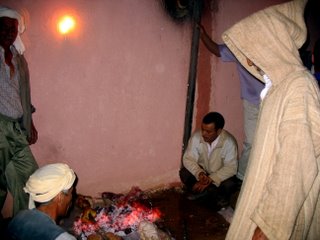

Morning work in the Taza kasbah

This is common throughout the country; when Moroccans work, they enjoy doing it in close proximity to others. They could work in solitude, but enjoy the company. When did we get away from this?
Peace Corps Mars

Here's a photo of my new house that I'll be squating in for the next two years. While behind me in this photo is an oasis, this is the rockiest terrain I've seen so far in country. A nice place; has two bedrooms, a living room (my bike/hand ball room- although my mother warned me just last week about playing games inside), two bathrooms, a kitchen, and a terrace. The terrace is the nice feature now. With a little shade and wind, reading or thinking can be pleasant there during midday. The current temperature here is probably 90-100 F, comparable to home (I only got 1). Down south, in places like Ouarazate and Tata it can reach 140 F. A friend told me at his site yesterday it was 115 F in the shade. I responded by sending photos of my river and pool. No, I didn't do that. I pity him. Its a different type of service there.
I haven't posted in 2 weeks and I have a lot of catching up to do as well as I need to send emails to several people. Sorry, I have the time, I've just been busy with other things like cleaning out my Red Roach Inn (literally). Hopefully, by this Wed., before I go up north for a week at an Artisans fair, I can catch up. To write a good email or blog, I have to do it at home with some coffee and music. The cyber cafe's here function often as Skype call centers, which is distracting.
P.S. I've been listening to alot of podcasts off ITunes. It's free, easy, and they have a large selection. My favorites are NPR: Koppel on the News, BBC Documentary Archive, Big Ideas, ESPN:PTI, and TedTalks(video). Drop me a line if you find anything I might be interested in.
July 12, 2006
Development goals for site
FYI. I finished some initial planning for projects to be preformed in the next 2 years at my site. For those that inquire about my activities over the next two year, here’s a tentative outline. Listed are starting dates until next summer.
July 06 / Ecological Survey of SIBE Lalla Shafia (#3 Priority)
August 06 / Begin working on Community Ecological Resource Book
Sept 06 / Begin Community English Classes
Oct 06 / Begin Wastewater Management Project (#1 priority)
Nov 06 / Regional Environmental Education Workshop
Fall 06 / Medicinal Project with USAID
Winter 06 / Website for Community Ecotourism (#2 Priority)
Fall-Winter 06 / Begin Environmental Education Programs in School
Spring 07 / Tree Planting
Summer 07 / Swim Lessons
This list willl change. Hopefully, I can work on all these projects, although other priorities will emerge and some projects will undoubtedly fail.
July 06 / Ecological Survey of SIBE Lalla Shafia (#3 Priority)
August 06 / Begin working on Community Ecological Resource Book
Sept 06 / Begin Community English Classes
Oct 06 / Begin Wastewater Management Project (#1 priority)
Nov 06 / Regional Environmental Education Workshop
Fall 06 / Medicinal Project with USAID
Winter 06 / Website for Community Ecotourism (#2 Priority)
Fall-Winter 06 / Begin Environmental Education Programs in School
Spring 07 / Tree Planting
Summer 07 / Swim Lessons
This list willl change. Hopefully, I can work on all these projects, although other priorities will emerge and some projects will undoubtedly fail.
July 9, 2006
Weddings and Berber dancing

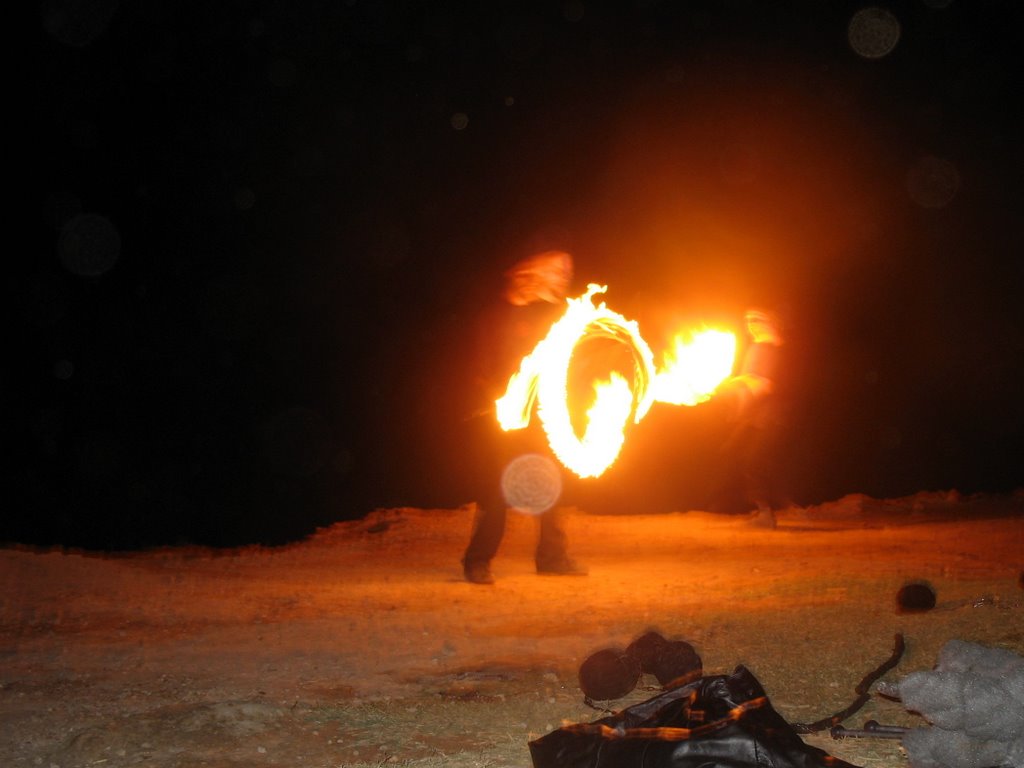
While a close friend was getting married in the middle of the U-S-A, 6 PM CT, I was at a summer festival at my site (11 PM GST). This is how the night concluded, with traditional dancing performed by locals next to the river and the German version of a laser light show. Four germans performed last night. The other dozen along with some Londoners will perform in a circus today. After Graham saw it in Jerada two days ago, he says it pales in comparison to the Shriners circus that my grandfather helped with for so many years.
Congratulations Jay. (pictured with his and wife Sonia's daughter Leah).

Mr. Caffeine Comeback
I’ve been on a caffeine roller-coaster for the last 5 months. It's been all jagged and kicks you around like that ride made out of pallet wood at Worlds of Fun, The Timberwolf. Tea at least five times a day, mixed in sometimes with a couple cokes (my moroccan champagne). My energy level fluctuates so much from my glucose intake that I’m afraid I’d be diabetic if I continued this way for several more years. Of interest, the diabetes rate in Morocco has jumped since better testing has been implemented. Here’s a breakdown of my daily schedule while I’m still living with a host family.
8:00 Breakfast and tea
8:30 Environment work in site (generally just talking with local residents)
10:00 Tea
10:30 Work on preparations for regional EE workshop in August
12:30 Lunch and tea
1:00 Nap
2:00 Study arabic
4:00 Tea
4:30 Study arabic
7:00 World Cup soccer, tea, and popcorn
10:00 Dinner and tea
11:00 Bedtime
On the previous, nap-time fluctuates. In many places, the streets are barren between the hours of noon to 2 or 3 because of the afternoon siesta. I wish we could incorporate this in America.
With soccer throughout the month of June, I was busy drinking tea and chowing on popcorn and peanuts (although I will always prefer the arabic word cow-cow). And sometimes, there were as many as 3 games in a day, which led to more gluttony at my neighbors house.
Related, I have to tell you about how moroccans have accessed the World Cup. Everyone that I have seen and all that I can imagine besides the rich bypass paying for the games by getting the password for unlocking the games off the internet from internet sites like “Pirate Booty.” Like imitation clothes or pirated CDs and DVDs, this exists in Morocco because of its poverty. Without these alternatives, many moroccans would have to go without.
Returning to my tea intake, its about lunchtime and I’m zapped. I need more sugar.
P.S. With the World Cup final between Italy and France tonight, I’m cheering for Italy. I’m acrimonious towards the France government right now; their colonization of Morocco until 1956 did bring some modernity towards Morocco, but their gains from exploiting the state were more then the costs. I’ll detail the exploits of the coal mining town of Jerada in a later post, its just too long for here. The short story is the same as others in the world; they came, they exploited the natural resources and filled their pockets, and left.
Moreover, I’m disgusted by the manner in which I see many European tourists acting here, insensitive towards culture norms like dress and cultural behavior. As one college professor told me before traveling, “When you’re abroad, act like your an ambassador. Everything you do reflects on your country.”
To clarify, I’m not lumping together French and other Europeans that travel to Morocco as callous individuals. Furthermore, americans have their own problems abroad; the term ugly american comes from our travel exploits. I have met some wonderful individuals. It’s very easy to be cynical in a developing country where development is so slow. They didn’t tell me when I signed up that one of my main responsibilities while I’m here is not to become jaded.
8:00 Breakfast and tea
8:30 Environment work in site (generally just talking with local residents)
10:00 Tea
10:30 Work on preparations for regional EE workshop in August
12:30 Lunch and tea
1:00 Nap
2:00 Study arabic
4:00 Tea
4:30 Study arabic
7:00 World Cup soccer, tea, and popcorn
10:00 Dinner and tea
11:00 Bedtime
On the previous, nap-time fluctuates. In many places, the streets are barren between the hours of noon to 2 or 3 because of the afternoon siesta. I wish we could incorporate this in America.
With soccer throughout the month of June, I was busy drinking tea and chowing on popcorn and peanuts (although I will always prefer the arabic word cow-cow). And sometimes, there were as many as 3 games in a day, which led to more gluttony at my neighbors house.
Related, I have to tell you about how moroccans have accessed the World Cup. Everyone that I have seen and all that I can imagine besides the rich bypass paying for the games by getting the password for unlocking the games off the internet from internet sites like “Pirate Booty.” Like imitation clothes or pirated CDs and DVDs, this exists in Morocco because of its poverty. Without these alternatives, many moroccans would have to go without.
Returning to my tea intake, its about lunchtime and I’m zapped. I need more sugar.
P.S. With the World Cup final between Italy and France tonight, I’m cheering for Italy. I’m acrimonious towards the France government right now; their colonization of Morocco until 1956 did bring some modernity towards Morocco, but their gains from exploiting the state were more then the costs. I’ll detail the exploits of the coal mining town of Jerada in a later post, its just too long for here. The short story is the same as others in the world; they came, they exploited the natural resources and filled their pockets, and left.
Moreover, I’m disgusted by the manner in which I see many European tourists acting here, insensitive towards culture norms like dress and cultural behavior. As one college professor told me before traveling, “When you’re abroad, act like your an ambassador. Everything you do reflects on your country.”
To clarify, I’m not lumping together French and other Europeans that travel to Morocco as callous individuals. Furthermore, americans have their own problems abroad; the term ugly american comes from our travel exploits. I have met some wonderful individuals. It’s very easy to be cynical in a developing country where development is so slow. They didn’t tell me when I signed up that one of my main responsibilities while I’m here is not to become jaded.
July 6, 2006
Nice trunks Yosshine

Here's my brother Yosshine being led by his brother and sister to the watering hole where we swim and and I shampoo my hair. At least 5 times a day I get asked by the neighborhoold kids to go to this swimming hole, which I documented in an earlier entry, and it is for the most part a daily affair, particularly in this heat. What a blessing to have several water sources this summer. Later, I'll document the heat wave that will surely hit us in the coming months. Oh, a/c my frosty friend, where have you gone?
Never without a hanut
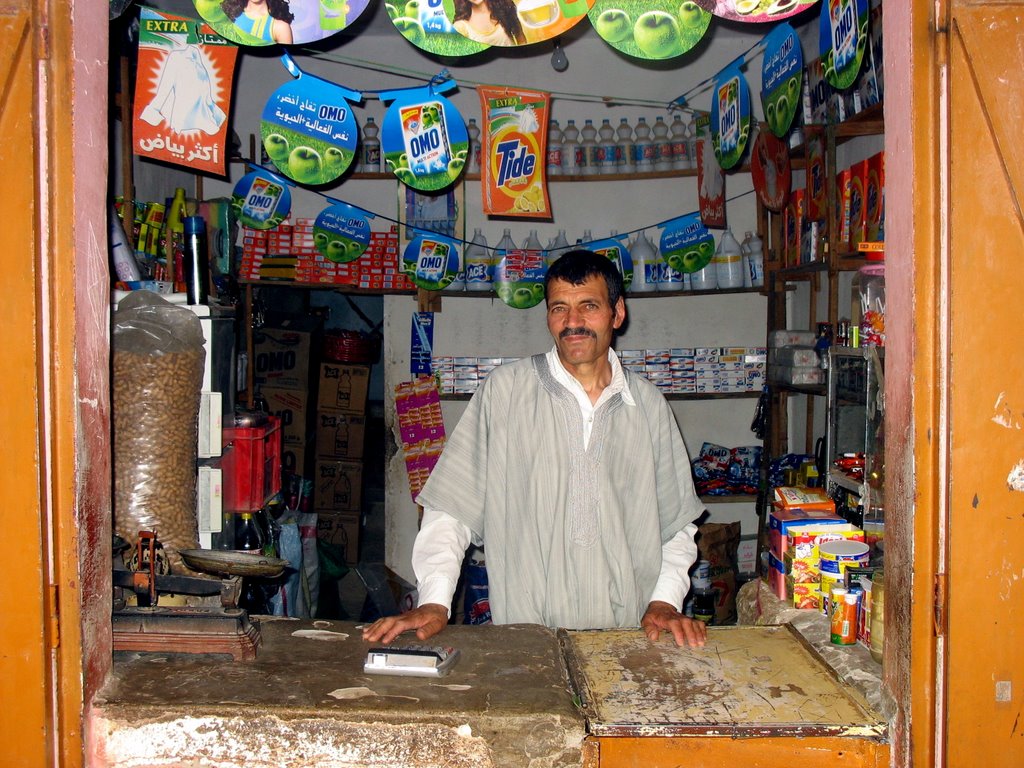
In my site, I have half a dozen hanuts to chose from, a convenience store that meets the needs of town residents when souk (weekly market) has passed or when somethings needed in a pinch. This hanut owner is my coke dealer. He feeds my addiction. A bottle of coca-cola is 4 dhm or 50 cents. On the environment, I’m pleased with how soda pop is distributed in Morocco. You buy a glass bottle, the same as what we once had in the states, you drink your beverage at site, then leave behind your bottle, will it be recycled later (cleaned and relabeled) and used again. Although the amount of plastic you can buy is ever increasing, I hope this continues to be a mainstay here. It just makes sense.
July 5, 2006
Before the storm
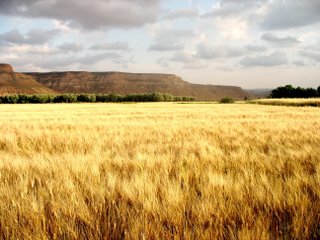
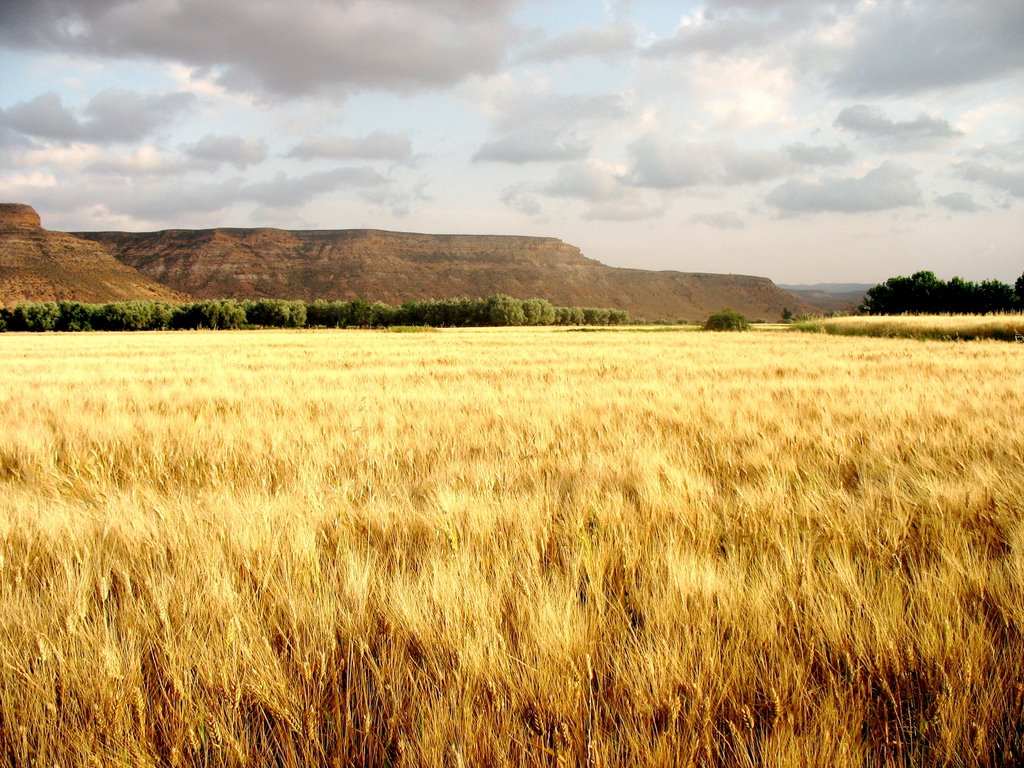
I've decided my favorite place before a storm is in a wheat field. Everything seems to slow down while the wind blows across the wheat, the wildlife quiets, people hustle to their houses, the rain begins slowly, and everything falls between chaos and calm.
Farm animals
My mother expresssed concern about the scorpion photo I posted previously, in accordance with the bylaws of motherhood, so I wanted to warn her before her trip over next year about other wildlife I’ve seen in the area. Here’re some photos. Don’t worry Mother, but pack your boots.




Sunset at Saida

Another reason to vacation in Morocco, the beach at the town of Saida. And its just 2 hours away, due north. Its supposed to have one of the best beach locations in the Mediterranean.
June 15, 2006
Scorpion
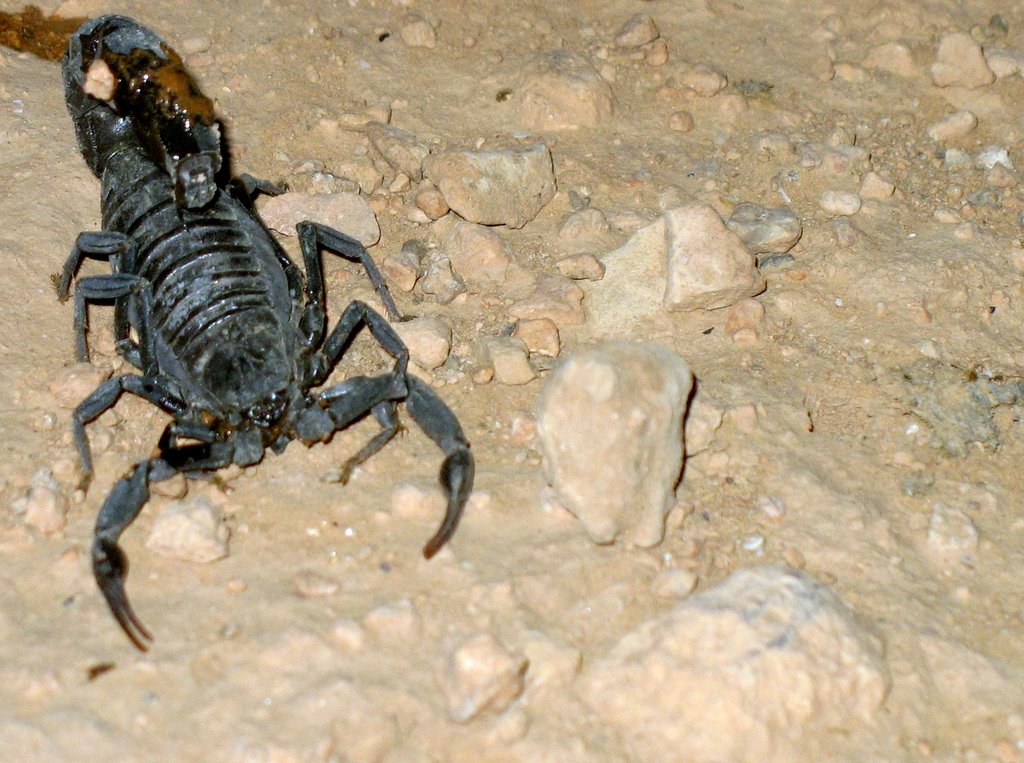
This scorpions stinger on its back end had just been hit before I took this photo by my host mother with a shoe. You can see the pus running out. It was found probably about 20 ft from our house. After killing it, mom then scoured the bedrooms of the house for an hour with a flashlight looking for others.
My summer bathing hole

My site has alot of water. Here's one swimming hole that children use to swim in; measures probably 30 x 10 x 1.5 meters. I've been bathing here, swimsuit included, the last couple weeks and will probably continue. The water flows from one of two rivers in my site. Spring water also joins this river along its way through an irrigation system. So, this pool has multiple uses; for recreation, bathing, and irrigation. Next week, I'll try to post a photo of this irrigation system, which is impressive and began throughout much of Morocco during Roman rule.
June 10, 2006
Sheperding along the coast

A photo I took after we left an isolated beach on the Med of a woman tending her flock. There were other sheperds and farmers and the area, and several times during our 3 km walk back to a main rd, we stopped to take it in. I'm reminded of the words of the author Kurt Vonnegut in one of his novels, talking about the need to stop in life sometimes and verbalize your good fortune; "If this isn't living, what is."
Camping on the Mediterranean
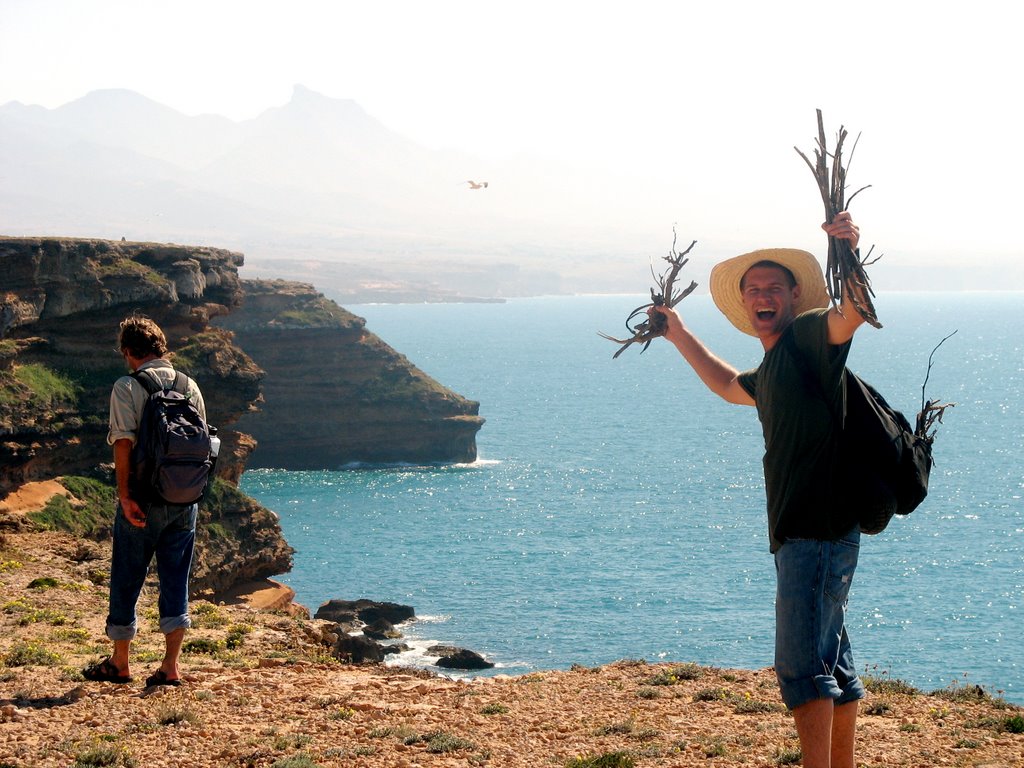
Graham and Josh, who are in the same area as me- it has several names; east Morocco, the Orienatal, or the Oujda provence. Both are from Maryland, are a lot of fun, and will get me into trouble.
June 2, 2006
Recess time
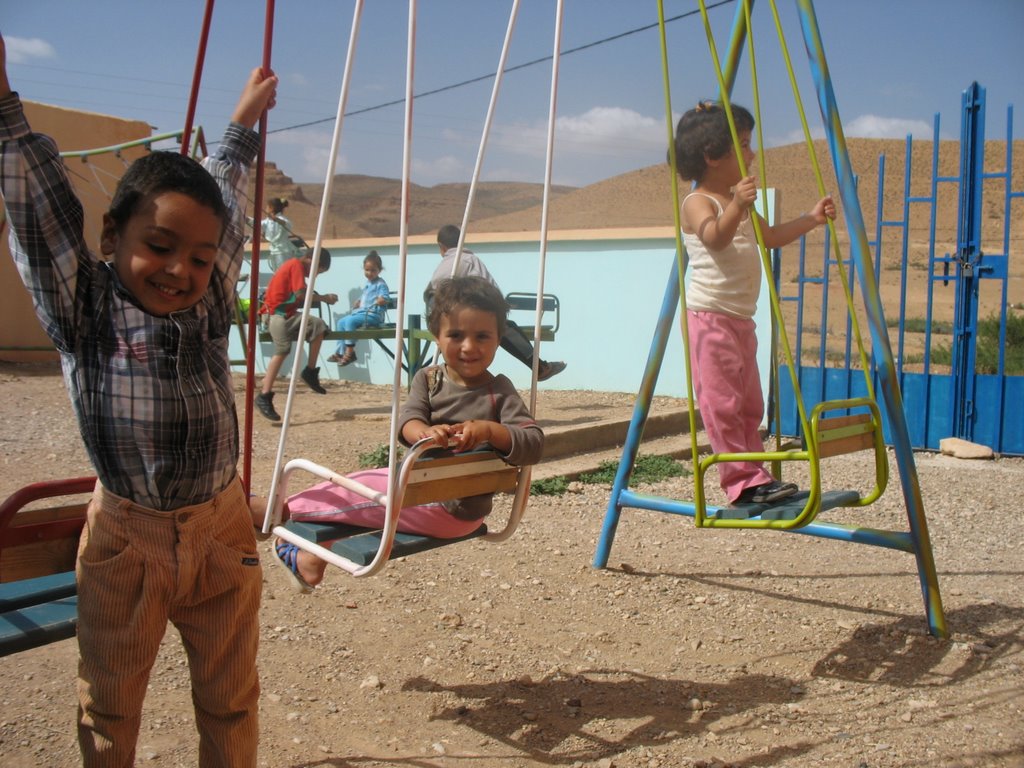
My 4 yr old neighbor Anes on the left with two other girls. Theyre in an area between the womens center (netti) and the preschool (madrassa). Check my photos; Ive posted more pictures.

June 1, 2006

Settling in
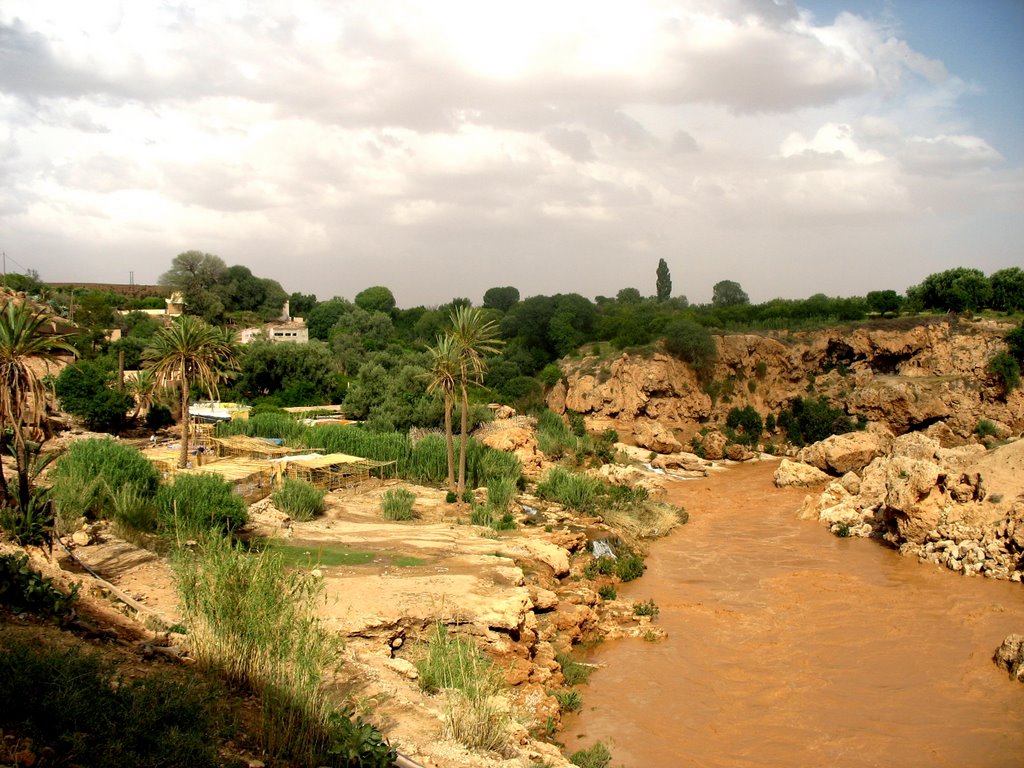
Home sweet home. I’m now at my permanent site in eastern Morocco. After my first week, everything is going well, although I’ve had my share of cultural adjustments to make; many bug bites from unknown assailants (bed bugs, chiggers, mosquitos, etc), language difficulties as well as learning a different moroccan arabic dialect, and incorporating myself into a large family (10).
The cultural adjustments I’m making right now are curable with time and patience, which I’m trying to take in large doses. When put in the proper perspective though, the situation I am faced with is a wonderful experience. The community, people, and cultural of my moroccan site are fascinating to say the least, and community members have been very respective to my arrival as well as very helpful. My main contact outside of my host family is and will be with men from a successful community association. They are very active and perhaps don’t need my assistance, but I will work on programs and grant writing with them. Other projects that I hope to be informing you about more over the next two years include; english classes, swim lessons or a camp, soccer field or basketball goal, bird and plant surveys, and a couple websites. Currently, the association is acquiring grant money to build a toilet facility near a frequent swimming hole and to refurbish two old buildings as tourist motels.
Other things...well there’s a list and should come out over the next couple weeks, but its just two much for one post. A few include: 1) Moroccans love American music, but the pride they have for their own song and dance overrides everything. 2) Satellite TV’s are in abundance, but are watched less. Once you get the whole package (around $300), you get free service, compliments of the govt. 3) The bamboo cafes are going up at my site. Around 10-15 are put up in the Summer and taken down after the tourist season. I have yet to figure out whose running these. I believe local farmers and craftsmen. I look forward to sitting by the river drinking cafe and stumbling with my arabic in a couple weeks. 4) My 3 year old host brother Yosshine is the cutest, only to be in competition with 30 kids that attend the pre-school I visited the other day. 5) Next to the preschool is the womens center, where I sat in on a beginning arabic class packed with women the other afternoon. Although most of these women are middle aged, they have a real desire to learn. And they more than I do. 6) As I told my mother earlier this week on the phone, moroccan roosters crow all day long. They’re not as well behaved as roosters in the states. 7) Someone please send me a kayak. The river at my site has risen significantly because of heavy rains, producing nice rapids. Minus the kayak, I’ll probably use an inner tube. 8) My family wants me to cook a traditional american meal next week. I’m thinking hamburgers with boy scout potatoes or tacos.
This weekend we’re going to the Mediterranean beach Saieda, about 3 hours away. Graham and I will meet up with Josh and were planning to swim, bbq, and maybe go spear fishing.
P.S. Here’s the name of my post, waxxa in Arabic. This is actually the correct phonetic spelling, not wakha. I got wakha from a arabic book before I came over. Their both pronounced the same.. wA-Ha.
واخا
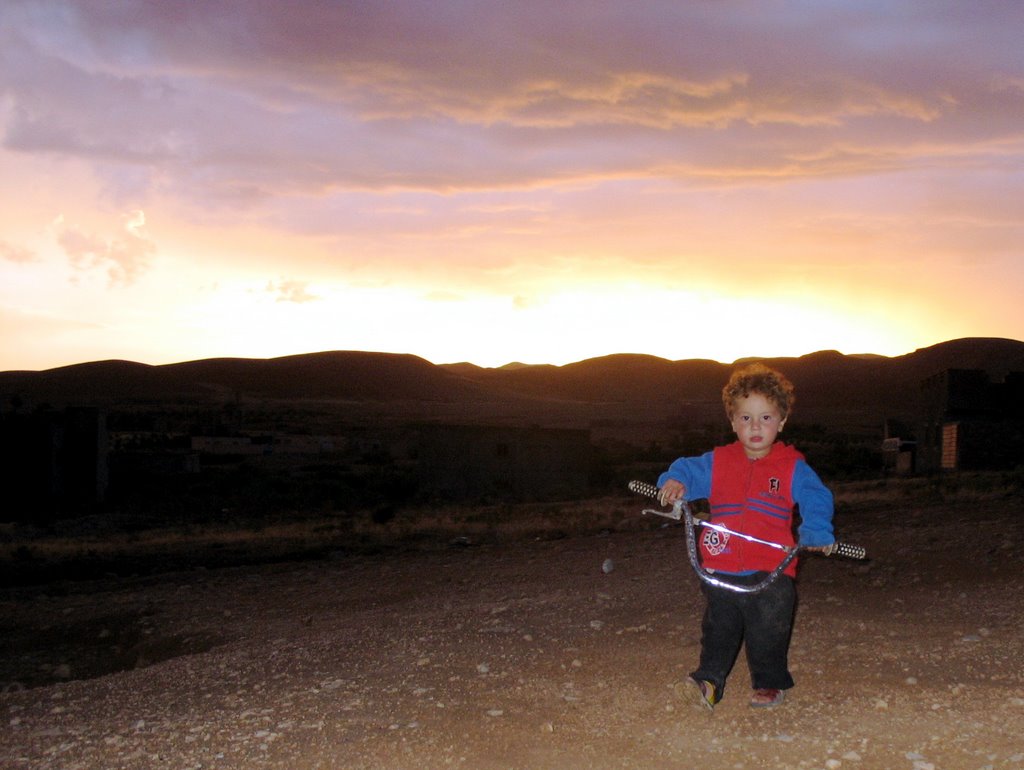
Here's Yosshine racing around with handlebars a couple days ago.
May 20, 2006
Isn't environmental ed lovely
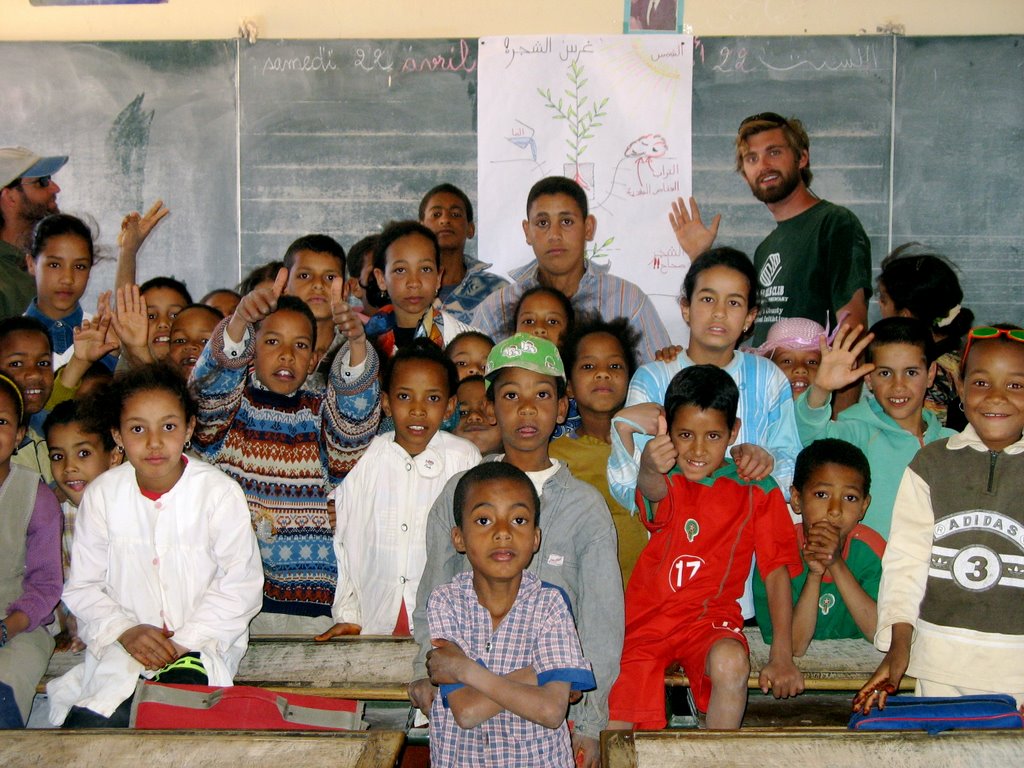
My mother requested a photo of Graham, my site mate for the next 2 yrs. "I want to put a face to a name; you know how I worry and it would make me feel better." Empathetic to my mothers concern, heres a photo taken after we had completed an environmental ed session in a local school at our CBT site. We will be 24 km apart, seperated by a 7 dhm taxi ride on a flat road. We get along well, and he reminds me of many of my old friends.
Also, I wanted to say HAPPY BIRTHDAY! to my 4 yr old niece Elizabeth. I hope its a great day and I expect the family (grandmothers especially) to take proper care of you.
Snails and orange juice
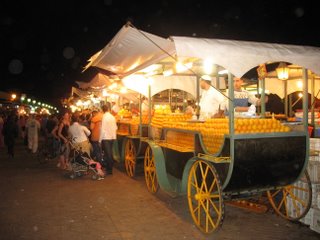
Here’s a photo taken of Marrakesh’s main tourist square, which is empty during the day but is occupied by vendors at night. Most sell a fish meal, but you can also get other things like tajin, couscous, and other things. Two other things that I’ve heard are mainstays in this area are snail vendors, who sell this snail soup that I’d probably never try, and secondly, orange juice stands that sell you oj shots. These guys will call you out from 50 yards, tell you their price (3 Dhms), and then if you choose, you can keep your distance and try to haggle them down.

Heading to site
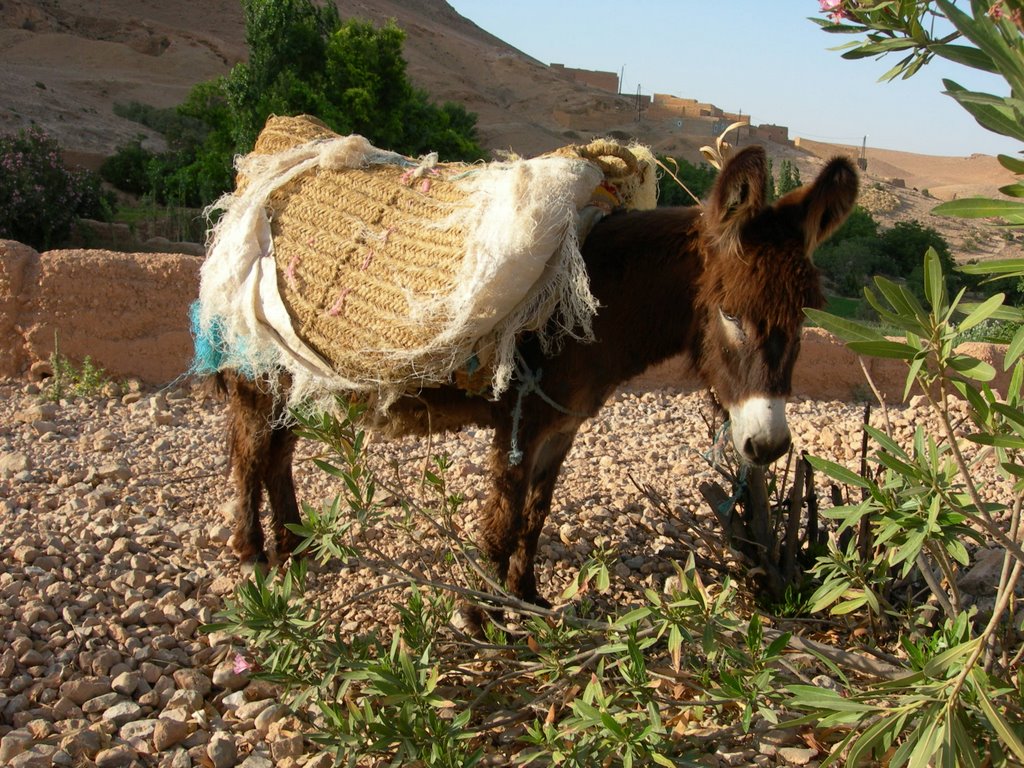
Donkeys are better than dogs. Safi.
Ahh.. my equivalent of finals is over and I just have a couple days before going to site. It’s been awhile since I’ve posted, but not much as happened outside of the normal routine. It’s too rigid in fact and I can’t wait to get to site where I’ll have the ability to dictate my own day. Also, I’ve been living out of my backpacks for the last 3 months and it will be nice to be more sedentary. And the spanish beaches on the Mediterranean (just 3 hours away) are calling.
I leave for site on Tues morning by bus, will probably stay in Marrekesh that night, then will travel by train and stay in Fez the following night before heading to site. I’m not a fan of Marrekesh; its all touristed-out with flying monkeys and snake charmers and it becomes an old routine fast. Also, like Ouarazate, it reaches temperatures of 140 F deg in the summer. My largest cities that I’ll spend considerable time in over the next two years are Fez and Oujda, which is something I’m pleased with. From what I’ve seen, Oujda is rather utilitarian; has all the amenities you need without being fancy and minus the tourists. This is nice. Population is 1/2 million and its known for being a major blackmarket capital for technology, etc from Algeria, Spain, and elsewhere. Fez is Morocco’s major college town, although its also a UNESCO site and is popular with tourist. It also has great leather products, and has an old casbah thats world famous.
My next post will probably be from my site, enshalla (”God willing”).
May 19, 2006
Hard work never goes unrewarded
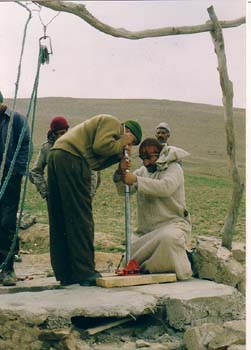
A photo from a friend of Moroccans building a well. In my opinion, Moroccans are some of the hardest workers around. Many work early to late, seven days a week. Then its common to eat dinner at 10 or later. That's a long day.
Be patient if you've checked my blog over the last couple wks and haven't seen anything. Things have been winding down in training, and I will have the next 2 yrs on my own schedule in 3 days..can't wait. Also, the internet is a little slooow over here.
May 18, 2006
May 9, 2006
Site visit in East Morocco

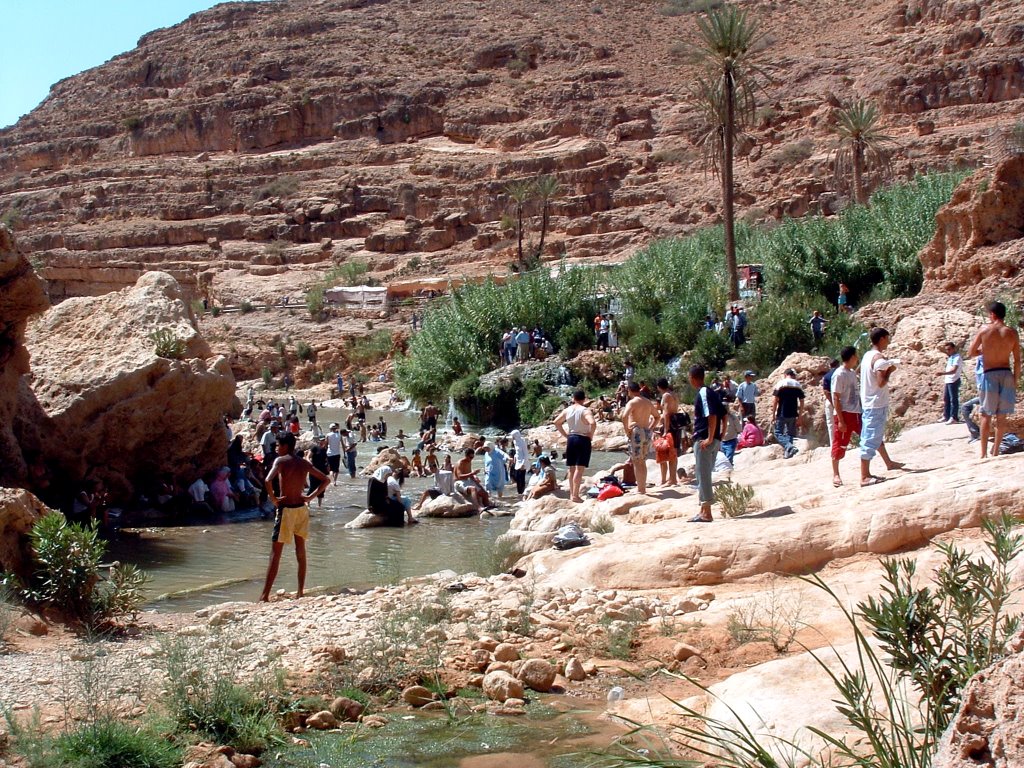
This last week I visited my field site; the place where I’ll be permanently for the next 2 yrs. It’s a community of around 500 people in Eastern Morocco. It’s a beautiful community with a large water reserve, a large river outlining the community (approx 20 ft wide and 6 ft deep at its greatest points), and two springs which are used for irrigation.
Agriculture is the primary staple of the community, with wheat being the primary crop. They also have fruit trees and wild herbs that grow amongst their crops. I’ve included some photos. In addition to agriculture, the community maintains itself by residents commuting and working in a town 20k away and by Moroccans from the surrounding area coming in the summer to swim. In the summer, the temperature can get above 100 F, and I’ve been told that as many as 200 tourists will come daily to swim in the river. In response to this, locals set up bamboo cafes that sell food, drink, etc. After the tourist season is over, the bamboo will be taken down and burned.
The infrastructure of the community includes 4 mosques, 10 general stores, a water tower (important), a school (through junior high; those wishing to attend high school have to travel to Jerada), a womens center, a youth center, and the kied’s office. The kied is comparable to a mayor, but often of a larger area that includes several villages. The community does have more features which I will divulge later, but that was my consensus in the quick survey that I conducted.
My host family that I will be living with for two months starting May 25 was very welcoming and accommodating. I couldn’t have asked for a nicer situation. My family includes brothers Yassine (2), Mohamed (11), Youssef (19), Hachim (22) and Nasrdine (25); sisters Safa (7) and Fatim (15); and mother Halima and Hammada. My host father is a farmer, and from what I know he drives a tractor around in surrounding communities helping with the harvest. They also have their own fields that they care for, along with assisting in the care of an extensive family network of farm land that includes uncles, aunts, cousins, and grandparents.
One of my main roles in the community will include working with the local mens association, which is very active and already has several projects that they want me to implement. In the beginning, they want me to teach english twice a week along with swimming lessons once it warms up. During that time, hopefully my language will progress steadily and I can begin working on other projects: establishing funding to help build and maintain a git (hotel), getting funding for a toilet facility for tourists down by the river, planting trees, teaching environmental education, surveying the local wildlife, and managing projects along with the Eaux de Forest (forest dept) in a protected ecological area next to my site. I also work closely with Graham, another volunteer who will be located nearby, and I’m sure he will do vice versa. We’ve become good friends, we work well together, and I believe they put us close together because of this. He has a construction management background, so will be able to be put that to good use. In all, I know that many of the projects I try or hope to implement will fall through. Maybe the best I can hope for is a 50% success rate (and that might be pushing it), but I’m motivated to get to work.
These next two weeks are like my finals weeks, very busy. It should correspond with finals in the states. Anyways, I'll try to keep it updated and send out emails, but fair warning. Salam.
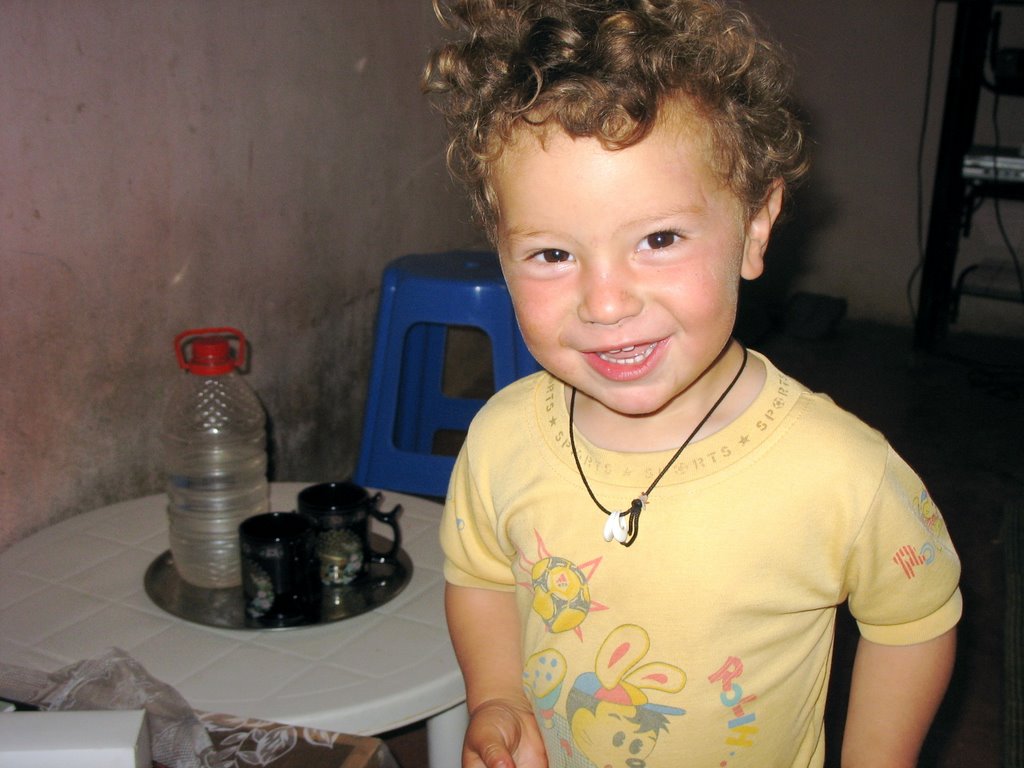
Here's a photo of my youngest host brother, Yassine.
April 28, 2006
House building

Here's how a house is built in most places in rural Morocco. Although some use concrete, which is expensive just like it is in the states, the traditional way is to build the dirt house. At the risk of overgeneralizing and misinforming my audience, I'll describe the process as the following.
1. You stake your claim to land in the community by birthright. If you were born in the community, you can build whereever you want as long as its approved by a town council. If your an outsider, you have to pay for the land. In the photo, you'll notice these piles of rocks. These are people staking their claim to land. The piles of rocks (which cost about 100 dHm to get delivered) represent future houses or territorial boundaries. When asked, I was told that they're 15 new houses being built within the next year. That's in a village of 40 households.
2. In our village, where there's a house, there's a ditch beside it where the dirt was taken from and used to build the walls (often 12 inches thick) of the house and their perimeter.
3. A crew of 4-5 guys build a house. One gathers the soil, 2 more walk a relay where the soil is shoveled in a bucket, placed on top of their head and then taken to a guy who stands on top of the wall (shown in its beginning stage in the photo). The job of the last guy is to stomp the soil down with an instrument that resembles a lightweight, wide surfaced mallet.
4. Houses are often 10-12 ft high, with their exterior walls being 6-8 ft. Concrete is often used as their floorbase in the interior and elsewhere as needed. The ceilings are wood covered with dirt or something else I haven't figured out yet. Under the wood and dirt of most ceilings is bamboo (which grows very fast), which looks very nice.
5. In all, these dirt houses are cheap, well made, and are environmentally appropriate. For the last month, I've been amazed at how rural Moroccans make the most of their available resources.
(Im pictured in the photo with Mohammad, the owner of the house where we have daily language classes. The wooden gate he's standing in will be filled and packed a little at a time, then moved. After the bottom level is completed, it will be raised and the bottom will be overlaid. This outerwall should be just around 7-8 ft high.
A Hard Day's Work

Here's a potter in our community collecting dirt that will become pots, cookstoves, etc. First, he collects from this area outside the community, a place where his father and grandfather also collected from. Then, he or his father (who is around 70) have to break the dirt into fine pieces and remove any rock. He has said this is the hardest part of his job; the preperation of the materials. Third, he has to add water and then makes it into his desired product. After talking with him and witnessing him work, I validate that he works very hard, with little in return. As the only breadwinner in a family of 11, he takes his pots to souk (weekly market) and makes litte.
When asked what would help him the most, his response is that if his van could be fixed (which broke down 10 yrs ago), he could take his products to a souk in Ouarzate, 40 km away where he could collect 5x the price. It's a sad situtation, although after visiting their family you realize that they're in economic poverty, but wealthy because of their high spirits and close family. Knowing this potter for the last 2 months, I would also say he's one of the most positive people I've ever met.
Harvesting Wheat
 The beginning of the Spring crop harvest has begun in Morocco. For the most part, I've been told that families cut their wheat or other crop, and then men with threshing machines come around to the villages (similar to America at the beginning of the 20th century) and thresh the wheat. Otherwise, I've heard in some areas, they use 5-6 donkeys lined together around a pole and march them around in a circle over the wheat. On the previous, my facts could be incorrect and I look forward to seeing this in the future.
4th Week in Community Training

L to R: Abdulahad, Sfia, Fatiha, Lmkki, Me, and Brahim
This last week was my fourth week of community training. It was a good week with several events happening. I had a language eval which I did well on, had a party with the family where they invited around 30 relatives, got some henna on my hand (which I found out later is a female thing), and generally had a good time. I’ve posted some photos.
The big news of the week was my site announcement, where I found out where I’ll be living for the next two years. It’s a town of 5000 in the Jerada province, which is about 30 km from the Algerian border in northeast Morocco. I’m excited; this a nice site and I’ve heard great things about it. This includes the fact that it has a large river running by it, has a strong association, has electric and water, and is 3 hours from a very nice beach on the Mediterranean. 20 km from me is Graham, who I’ve been rooming with at our hotel we use as a base in Ouarazate and who is also in my language group during community training. We get along well; he’s a smart guy, is from Baltimore, and has a background in economics. Another guy I get along with is Josh, who will be our next closest volunteer, is about 100 km away. All three of us will probably be working on some projects together and will also be learning some Algerian Arabic in addition to Moroccan Arabic. Also, our sites are about 3 hrs away from the Mediterranean, and a great beach community called Saidi. From there, its another few hours to the port city of Melilla, where ferry’s can take you to Europe.
I leave tomorrow for my first site visit. From Oz, it will take three days to get their, we’ll stay for three days, and then will take three to come back. Will probably stay the night in Rabat and also in Fez or Oujada, neither of which I’ve seen. I look forward to getting out of the Ouarzate region, where I’ve been for 2 months and seeing the rest of Morocco. I’ll tell you all about when I return.
Like I said earlier, I feel good about my language progress. I think I’m about 30% fluency right now, which can get me around Morocco for the most part. After a year, I hope to be around 80% in Darija, and then switch to classical Arabic and/or French. Peace Corps pays for my use of a tutor, which is real nice.
Well this is a good point to stop, and I’ve had some stories that I haven’t included in my last couple posts, but I’ll try to play catch up starting next weekend. Ill have some free time to sit around this week and write something poetic.
April 18, 2006

April 16, 2006
April 10, 2006
How Boys Play - Rock Throwing

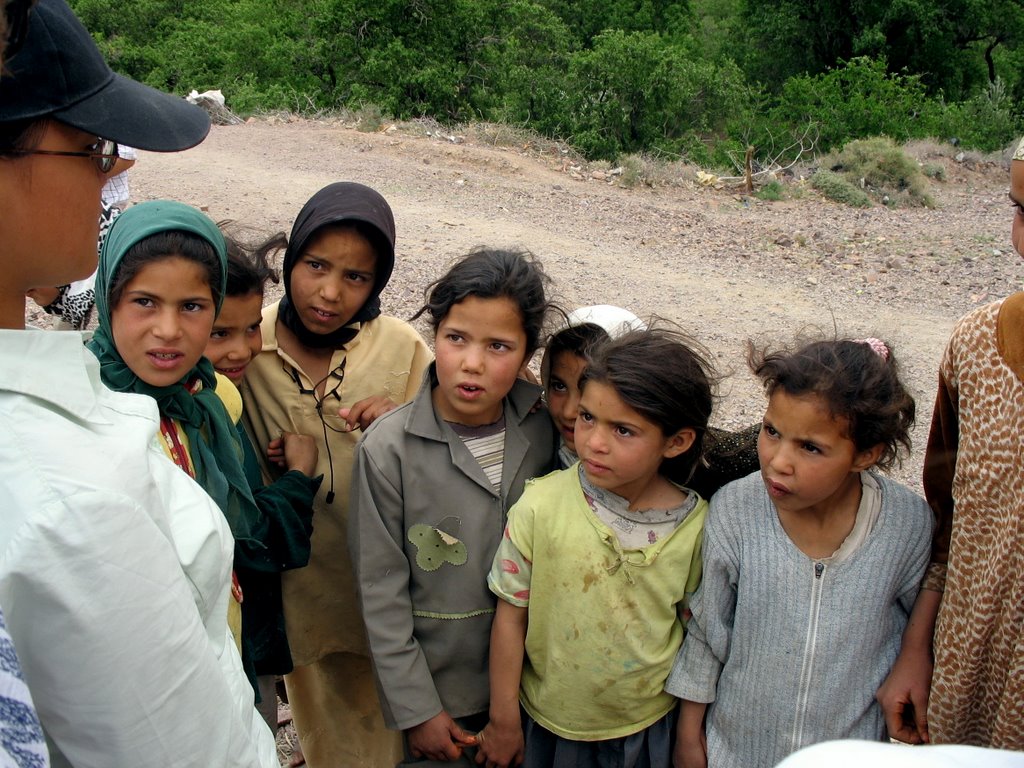
While we were milling around after lunch, I started throwing rocks with some small boys (age 5-7). We drop kicked rocks and skipped rocks on top of other rocks. Then I put my nalgene water bottle on a small rock peak similar to the one in the photo for target practice. Five minutes later, 25 village children are throwing rocks at the bottle, continuing for 30 mins until Melanie, the volunteer living their began to get worried that they might hit one another.
From my experience so far, Moroccan children, specifically Berbers, are tough and agile. With many villages having only a few soccer balls and lots of rocks, throwing rocks at one another is common. Most of them can throw as far as someone twice their age too. There are only boys in this photo because after they were asked to stop throwing rocks by a local man, the girls were the only ones to really listen.
How Girls Play - Elbow Tag

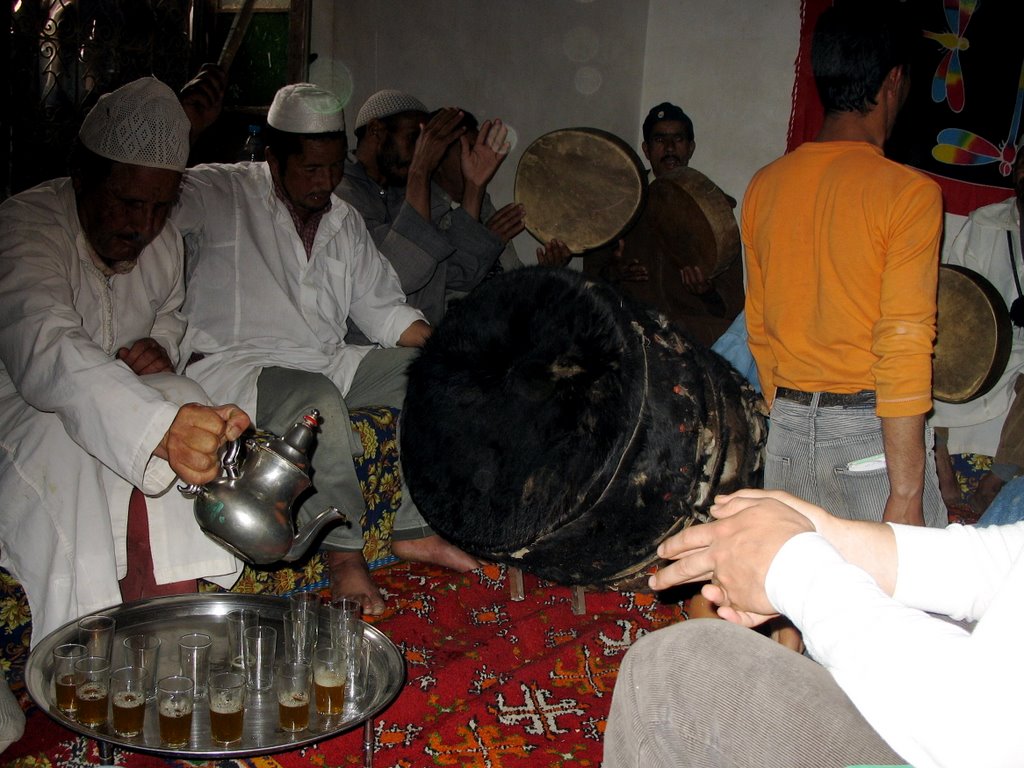
I went to a Berber village on Sun with some other volunteers. We planted approximately 700 olive trees as part of a training exercise. The trees were provided by PC, while the community of 400 was responsible for our food and entertainment. When we arrived at 9 AM, we had tea with something I can only describe as mushy rice with butter. After, we planted trees till 1:30, then ate tajin for lunch, had an hour break, then were provided entertainment which included village men playing drums and singing. Two hours after lunch, we had our second meal, coucous. I've decided that Moroccans like to feed me like my grandmothers- till your stuffed and then they'll offer you more. I'll post a photo later of the drumming which included hand drums (like tambourines) and a big bass made from animal skins. These men had great voices, but were probably outdone by the women who performed later but which we did not witness because some of them were not married.
Check out "my photos" link. I posted a photo of a berber man who we thought looks and has the same mannerisms as Sean Connery. When we talked with him, we heard a little of the scottish draw too- "I thought Christmas came only once a year."
April 8, 2006
Junabir Tree

I thought this was an argan, a tree species that is disappearing in Morocco because of its wide use. These trees are also somewhat reminiscent of joshua trees, the desert species found in California. It's a junabir though; they grow in the mts regions while the argan is found on the coasts. For me, it's an Ansel Adams photo.
April 7, 2006
Field Trip to Berber Village

I spent the last week in a small mountain village in the Ouarazate province on a field trip. Two of us stayed with a couple volunteers in a dirt floor house with no electricity and water. What the village lacked in amenities it made up in landscape. Surrounded by mountains colored with red clay, locals were farming mostly wheat in the widest valley areas while fruit trees like fig, apple, and apricot outlined the community and extended into the mts cracks. I was told that the wheat should be ready to harvest in late May, early June.
The site also had an abundance of amasythe (sp), the purple quartz popular in jewelry. We were told that groups of tourists in 5-6 SUVs arrive once a week at the site, have drink and food at a locals house/cafe, then are driven across the village and dumped off in close proximity to the rock reserve. On one of last days I observed this; their arrival, their rock collection, and then their departure. The community is not currently compensated for the harvesting of this natural resource, but that is one project that the community PCV is working on.
Also of interest in the village is the fear of cameras. I tried only once to take a picture; a woman was throwing rocks at a dog outside her house, noticed I had a camera pointed in her direction, then sprinted to safety behind a wall. I felt bad and have learned (or already knew) that I should have prefaced my action by asking for her permission. I don’t know if this general cultural norm in Morocco, a dislike of having your picture taken, has a greater cultural significance or if it’s as as simple as a privacy matter. In any case, I probably will take few people photos until I am able to establish trust in a community.
Overall, I’ve found that the people in small communities like the one I visited are some of the nicest people around. They are not outgoing, but are polite, helpful, and friendly.
Next Tues or Wed is the lunar holiday Aid Mawlid an Nabbaoui. This is an Islamic holiday, of which I believe there are two more Aid’s (Aid al Fitr, Aid al Adha) throughout the year. We will celebrate part of this holiday with our host families on Tues when we go back to site.
April 2, 2006
Tea and Tajin

This week at community training was easier than the last. I’m making some language progress (swih b swih - little by little) and I am more comfortable in my site and amongst my family. I’m eating a lot of tajin, which is like a potluck that is fired over a small wood burning stove or budagas tank (propane) for about an hour. Tajin is like America’s steak and potatoes served in a glazed pyramid shaped pot; it’s the staple of the country. Right now, my consecutive number of tajin meals (not counting breakfast) stands at 5. This occurred two weeks ago when we first arrived at site. We got it at the hotel before leaving, once more while in transit, and three more times at my site.
The 2nd staple of a Moroccans diet might be couscous, which unlike the tajin, I don’t care for because its bland. It’s served in the same pot as tajin, and combines small pieces of rice, veggies, and meat. With both meals, the meat and potatoes are at the bottom because they take longer to cook. From what I know, the veggies are added later. For drink, I don’t know how they stave off dehydration. There is no drink served with meals, except mint tea with breakfast (which is normally just bread) and buttermilk with couscous. So far, I’ve refused nothing at the table, although the buttermilk requires an iron stomach. Also dinner in Morocco can be anywhere between 9-11 PM. In my host family, we eat at 10, then I go to bed at 10:30. Often, I can just feel dinner converting into fat while I lie in bed.
If tajin is the staple meal of Morocco, mint tea is their water. Since I got here, I’ve been drinking tea for breakfast, morning break (10 AM), afternoon break (4 PM), in the evening (7 PM), and sometimes as a nightcap. Tea drinking is also the social icebreaker; we’ve already gotten numerous invites, which the culture makes hard to refuse. In the cities, moroccans with a little English will call tea “berber whiskey.” The first night with my host family, I called it this, they just picked up on “whiskey,” and my host brother Brahim let me know that alcohol was a shuma (something that is socially condemned, although not illegal) in Morocco and in Islam. Also on tea, if a normal kettle of chinese tea with local mint is around 32 oz, Moroccans like to put in about 10 oz or more than 1 cup of sugar. It’s like juiced up Kool-Aid or I’ve been told southern tea.
This last Thursday we went to the souk (weekly market) in Tourbadour, a community of a couple thousand. The souk is seperated into a vegetable/fruits section and then pottery, clothes, rugs, cheap tech gadgets, etc are intermixed. There is also the open meat market and a livestock area, where sheep can be bought for 200 dhm or a donkey for around 2000 dhm I think. The dhm/dollar exchange is 1/8.9.
P.S. There are definetly two things you can get from Morocco: cavities and patience. I tried posting a photo with this post, but gave up after 30 mins. I have posted some photos to my flickr account under "My Photos." These seem to upload quicker.
March 28, 2006
1st Week at Training Site

I spent the last week with a family of 5 in a small community of 50 households (many related) that is located in the rolling hills in southeast Morocco. The infrastructure of the community includes the following; electricity, running water, 3 natural springs, one hanut (store), a glis (french hotel), and a mosque. The towns staple is farming that’s done in a valley, courtesy of the springs, while their houses are up the hill in an arid region that seems to have more rocks than soil. It’s a beautiful community though and the residential area makes me think of grandma’s in western Kansas because of some of the landscape, the wind gusts, and solitary nature. Another volunteer described it as “Peace Corps Mars” for its rock, clay floor plan. Walking through the cultivated lowlands, however, is like nothing I’ve ever experienced and features ancient farming practices like hand dug irrigation ditches, small fields, and multi-crop planting laid beneath numerous palm trees. While my friend Graham described the housing area as Mars, this fertile lowland seemed biblical.
My family I stayed with included my host mother Sfia, sister Fatiha (20), and brothers Brahim (18) and Abdlouwahad (15). I have not met my host father Lmkki; I’ve been told he’s a tour guide and is probably in the countryside with some French tourists. The rest of my family is very nice and is very supportive of my language deficiencies. There are few words to express the anxiety one first has when sitting in a room full of Arabic speakers and having nothing to say after you’ve exhausted all of your vocabulary in the previous introductory five minutes. Last week had to have included a thousand myzein (good), zwina (nice), shukran (thank you), snu hadak (what is that), and mafhmtsh (I dont understand). Language is frustratingly slow, probably because we only spend about 4 hours a day on it, we are learning arabic script, and because the pronunciation is so different. I believe there are like eight phonetic sounds in arabic that have no english equivalent, a couple of which are like someone coughing up phlegm. Another one is like saying G-R-H all at the same time, often with another constant coming before the letter.
Overall, it was a great week, just challenging. We traveled back to the hotel 40 km away on Sat, had Sun off, did technical and language training on Mon, and will head back to site this afternoon. I’ll be their again till Sat, then will head somewhere yet unknown for a week thereafter on a field trip to explore the countryside and get more technical training. My next full day off will be in three weeks. In all, the whole experience has become more intense now; instead of a collegiate summer camp as described early, it feels a little like boot camp. This is what I expected though.
In my next post, next week, similar time, I’ll try to provide more info about my experience with my host family. It’s intense and is worth detailing. Otherwise, email me.
March 19, 2006
Soccer on the Plaza
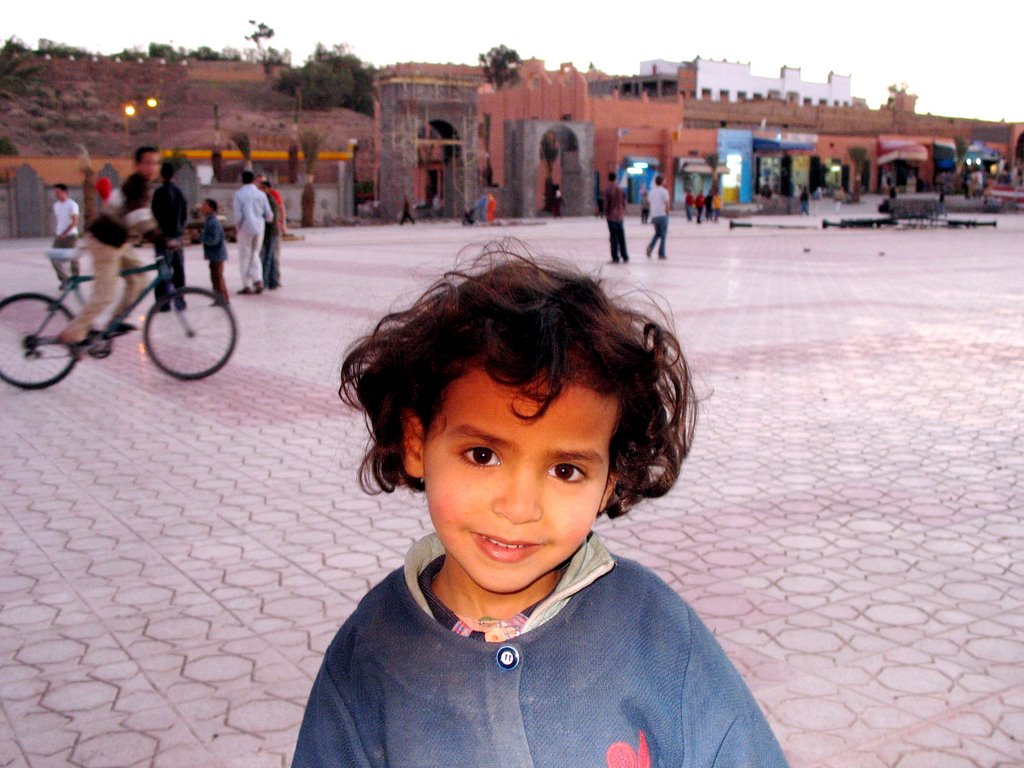
After class each day, several guys have been heading out to the plaza like sacrificial lambs to talk to the local kids. What I mean by this is that the children love to gather around you and talk to you all at the same time. Most speak a little French, some know a little English, all are patient and enjoy repeating and listening to the same catch phrases again and again. The 11 year old boy that has become my tutor is coincidentally named Zacharia (my middle name). I'll include a picture of him later. The girl posted in this photo is Marianna. I don't know her age, but her two older sisters, including one who took this photo, weren't far off. In the background I believe, you'll see the beginnings of a nightly soccer game.
This coming week I'll be at community based training, which means that I'll spend the week with a host family, where I'll be working on my language skills.
March 16, 2006
Like College Wrapped into Summer Camp

This past Sunday I learned that I will be learning Darija (Da-Rar-jha) for the next 11 weeks. Darija is the native name for Moroccan Arabic, and is used as reference because if I said I was learning Arabic, it would technically mean that I'm learning classical Arabic. In general, you could say that I'm learning an Arabic dialect. Other dialects in the world include Egyptain (used in Arabic films), Iraqi, Jordanian, etc. If one was to make the mistake that the Arab world is homogenous or lacks diversity, distinctions like the previous plus cultural elements like history, socio-economic status, media, and even religion (Sunni, Shia) provide examples of the Arab worlds richness. For example, I've found that many people that speak Darija also French fluent and speak some English and Spanish.
Along with Darija, other volunteers are learning Tamazight and Tashelhit, two native Berber languages that are found in the Atlas and Rif Mountains along with the surrounding lowlands. Although I am very interested in the history of the Berber which I find comparable to North American Indians, I'm excited to be learning Darija. As the national language, it gives me travel flexibility, allows me to work more on Arabic script (which I'm currently learning), and gives me more choice in chosing a secondary language. By this I mean that after May, I'll have the opportunity to find a tutor subsidized by the PC to work on Darija and maybe a second lang like French, Spanish, or Tamazight. Also, once I learn arabic script, I can self study classical arabic through literature.
Since Sun, I've been in a language tutoring session of 5 for 4 hrs a day, while the rest of the day has been spent on cultural/technical training. Our days are typically from 8-6 and the language is exhausting, but we still get quite a bit of free time. Popular activities in the evening and on Sun (our free day) include playing soccer with the local boys, shopping, and studying.
Of interest, yesterday when I was bargaining with a shop owner over the price of a handbag for a female volunteer, I was told that I was "trying to buy a camel for the price of a chicken." When he said 130 dirhams, I said 70. In response, he pretended to act insulted, then invited us in to his shop for tea. I've found that this is common, friendly bait; invite you for tea or talk, then sell you their goods or handicrafts. Coming from a cultural where the only bargining is done at the car dealership, pawn shop, or garage sale, this is something I'll have to get used to. Also, I don't view this friendly, covert approach should be called hustling. When a local shop owner Rasheet invited us into his shop, it took him 20 mins before he started selling us anything. First, he ordered his asst to prepare tea, which didn't arrive till 45 mins later. Next, he talked with us about Moroccan cultural and history. Lastly, he went for the sell, but in a way that emphasized making us repeat customers. In the end, he sold me a nice pair of camel leather slippers (I've been told its goat) for 100 dhms, 60 dhms cheaper than what he said was his regular price.
Next Mon, I leave to go live with my host family for the week and will begin what is called community based training. I've been told that one of PC's requirements in selecting potential families is that they have no English speakers.
March 11, 2006
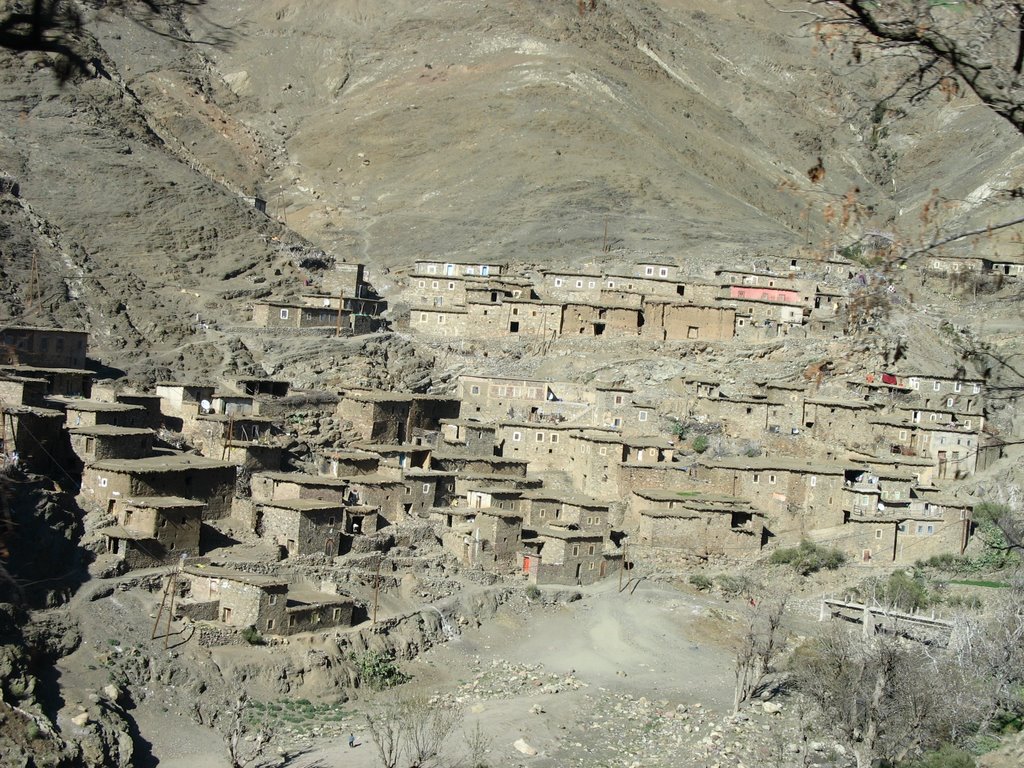
After a 10 hr bus trip yesterday through the Atlas Mountains with countless switch-backs, we arrived at our training site where we’ll be for a few weeks. The landscape here is arid with few trees, flat, with terra cotta buildings stacked tightly together in the community. There is always construction going on, like the other Moroccan towns we’ve been in and passed through, reminding you of home and that progress defined by one’s own cultural is a universal element of all people.
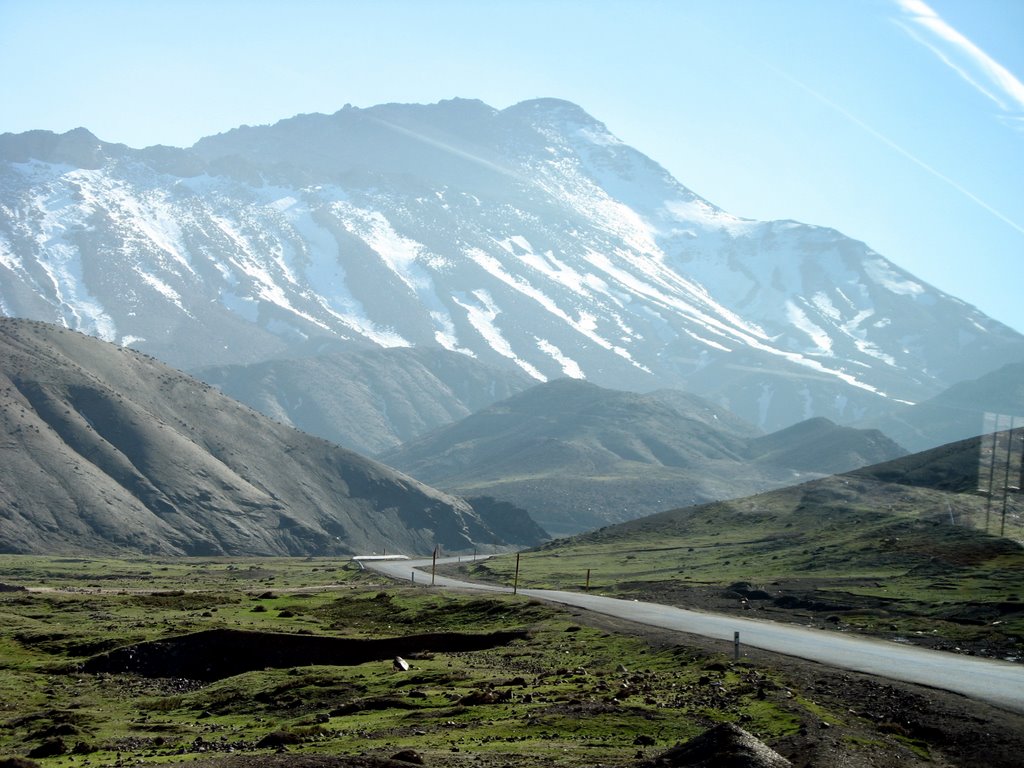
On yesterday, our trip through the Atlas was the most exciting moment since I’ve been here. Climbing and descending through the mountains probably took 3-4 hours and made at least one person sick. The view was breathtaking, many of the small, complex communities were intimate, and the paved road we took that was shared with other buses, small cars, and desert SUVs seemed intrusive. The road was narrow with barely enough room for two cars to pass, and their were many times that I felt our bus could just tumble off the edge and go rolling down a 70-80 degree, 200 ft embankment.
The Berbers, whose communities in Morocco began once you ascend into the Atlas and where we presently reside opposite side in the arid flatlands, make up over 40% of the states population, although for a long time they were not officially recognized. They have two languages, which now escape me, and their roots in the area known as the Maghreb (Morocco, Algeria, Tunisia, and Libya) can be traced back to 10,000 B.C. This has been verified by archaeological finds in primitive agricultural settlements and encampments alongside ancient lakes. Later, the native Berber tribes (comes from the Greek “barbarian” and still maintains that derogatory sense in Arabic today) entered written history through trading with the Phoenicians around 1300 BC (Rogerson 2005).
Berber culture seems fascinating and is user-friendly, meaning they seem very welcoming to strangers that impose upon them. In a cultural sense, the Berber can be juxtaposed with the Aymara Indians of Peru and Bolivia in S. America. Both groups were able to protect their cultural identity in highland, mountainous regions while those living geographically below them in the lowlands were often conquered, converted, and forcibly assimilated into the dominant, foreign cultures of the Inca, Spanish and Portuguese and for the Berber, the Romans, Moors, and French. The Berber also seem comparable to North American Indians in more than the fact that they arrived in Africa and American at relatively the same time. I’ll probably write more about their similarities in the future.
Some of the Berber settlements are also reminiscent of the Pueblo Indians in the southwest U.S. in that they are built into the side of the mountains, although many are built on leveled off flat areas. They are small terra cotta buildings, although some seem made with a more simple clay and the villages that I saw ranged in size from 10-200 houses.
March 9, 2006
Rabat 3rd day

After sessions during the day that included an intro to Islam, some general info for administering medical help when a doctor is not available, and a more specific discussion of our environmental duties, we left for the Medina again, although our final destination was the sea. Traveling through the Medina this time was much easier; one of the guys I accompanied had lived and went to school in its perimeters while studying abroad. He said that after his third week of school, he was still losing his way and others would miss the whole day trying to find the school.
From the Medina, we cut through a casbah (fortified market/residency) to get to the Atlantic at dusk. After walking (not climbing) up to a higher elevation, the sea looked beautiful and visible outlined next to the city and ports. Its unlikely that Ill be posted in a costal area (maybe wetlands), so this will probably be my last visit outside of vacation to the Atlantic.
Tomorrow, we leave Rabat and go to our PC Training site for the environmental sector. After a few days their, we’ll be moving in with our host family. We’ll spend most of our time on the bus traveling to the site, so I look forward to seeing the countryside. I also look forward to learning the language, either Berber or Moroccan Arabic, although the paradox is that I always hated language classes in school. Hopefully I’ll be more motivated this time.
This post closes my rein of receiving free wireless from the cybercafe down the street (which incidentally charges 15 dirham an hour (1 dollar = 8.9 dhm). My roommate and I, another Mac user, operated our own quasi cafe; we must have had 3 at a time in the room most nights. Now, I probably will have only occasional email access.
Rabat 2nd Day
This Wed was vaccinations, a visit from the U.S. ambassador to Morocco, and a trip to the medina (market). Will skip to the medina. After a day of lock down in the hotel, we were allowed to leave for 2 hrs that evening before our curfew at 8 PM. Rabat’s medina when we entered during the rush in the evening probably had between 50-100k people packed tightly. It covered several miles in each direction and was like a labyrinth. To my understanding, this maze like quality was built into their construction centuries ago. If invaders (like the Moors, French, and Babri pirates did in Morocco) entered a medina (where many people also live in relation to their shops), residents could scramble and hide.
The medina is the economic bloodline for much of the city’s populace. Next to Rabat’s medina was a Casbah, another market/residency that is enclosed inside a fortress. This one was just off the Atlantic and I’ll talk about our visit their later.
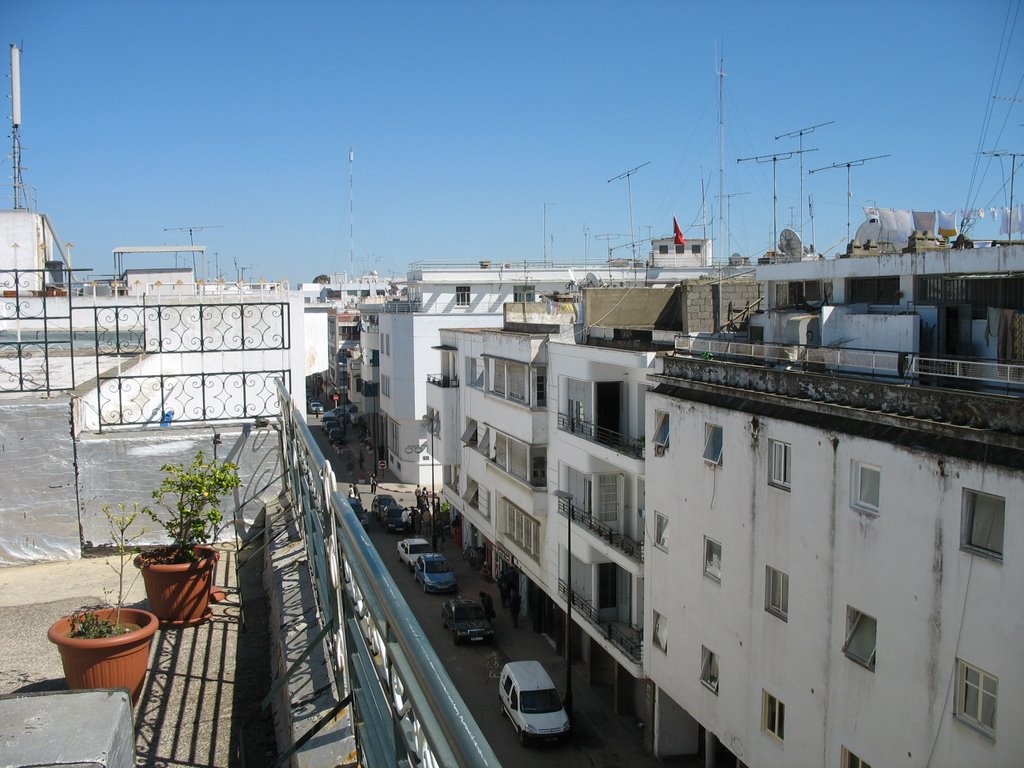
NOTE: the photo above is not of the Rabat medina. It's typical one story buildings are packed tightly together, it's strictly for pedestrians (although some motorcycles came roaring through), and much more decorative. Photos of medinas can probably be found online. For my own safety, I thought it wouldn't be wise to take a picture of a crowd shopping when candid photos are normally frowned upon in Muslim culture. Of note, when one person in my group asked if he could take a Moroccans pic, the woman asked for money. I've heard this happens often in sub-Saharan Africa too. In my opinion, those that are being photographed aren't to blame, but that its a product of our materialist cultural where everything's equated to money. The idea of asking for money for services rendered is foreign to many cultures; it was intro by capitalist states.
The above photo is another from the hotel rooftop. Notice all the antennaes on the right side. I actually see more satellite dishes- they're everywhere.
March 8, 2006

Rabat 1st Day
NOTE: Here’s my first post on my Peace Corps trip to Morocco. I have a large canvas to paint of this foreign landscape that I’ll be in for the next two years and will try to cover most of what I find relevant. With that said, I will be more formal in my posts and will practice self censorship as this is in the public domain. Feel free to email with any questions or personal info.
DISCLAIMER: Any message, photo, or other information provided on this blog site does not represent the views or opinions of the United States of America or the U.S. Peace Corps.
++++++++++++
After leaving JFK Int’l from NYC at 6:30 PM on Mon., our flight on Royal Air Maroc arrived Tues at the Casablanca airport around 7 AM to a bright sun and cool weather in the 40s. The airport was large, surrounded by crop fields, shrubs, and some palm trees. From Casablanca, we took a bus to Rabat to the Chellah Hotel, where will be staying till Friday.
At the Chellah, we spent the day in meetings discussing security, vaccinations, job roles etc. About meals, we’ve had a mediterrean buffet style spread with things like mutton, fish, chicken, rice, veggie combos, and cake desserts. A big part of a Moroccan day is drinking mint tea, which is like sweet green tea (hot) and is served with cookies. With little Pepsi and ice cream available to me over the next two years, tea will probably become my daily staple.
My first impressions of the culture from experience, not readings is that Moroccans place a lot of value on their relationships and daily interaction. As an example, I can’t speak Arabic yet, but I asked one of the servers today “kif halek?” (how are you). Well, I knew but was not prepared for the response that comes when you engage some people beyond the usual Salaam A’likuum (Peace be upon you). From “how are you,” the conversation quickly turns into a rapid succession of “how is your family, how are your parents, how is your health, where are you from...” The normal greeting when you engage someone includes 7-9 formal phrases. I was overwhelmed, but will start working on this.
DISCLAIMER: Any message, photo, or other information provided on this blog site does not represent the views or opinions of the United States of America or the U.S. Peace Corps.
++++++++++++
After leaving JFK Int’l from NYC at 6:30 PM on Mon., our flight on Royal Air Maroc arrived Tues at the Casablanca airport around 7 AM to a bright sun and cool weather in the 40s. The airport was large, surrounded by crop fields, shrubs, and some palm trees. From Casablanca, we took a bus to Rabat to the Chellah Hotel, where will be staying till Friday.
At the Chellah, we spent the day in meetings discussing security, vaccinations, job roles etc. About meals, we’ve had a mediterrean buffet style spread with things like mutton, fish, chicken, rice, veggie combos, and cake desserts. A big part of a Moroccan day is drinking mint tea, which is like sweet green tea (hot) and is served with cookies. With little Pepsi and ice cream available to me over the next two years, tea will probably become my daily staple.
My first impressions of the culture from experience, not readings is that Moroccans place a lot of value on their relationships and daily interaction. As an example, I can’t speak Arabic yet, but I asked one of the servers today “kif halek?” (how are you). Well, I knew but was not prepared for the response that comes when you engage some people beyond the usual Salaam A’likuum (Peace be upon you). From “how are you,” the conversation quickly turns into a rapid succession of “how is your family, how are your parents, how is your health, where are you from...” The normal greeting when you engage someone includes 7-9 formal phrases. I was overwhelmed, but will start working on this.
Subscribe to:
Posts (Atom)